

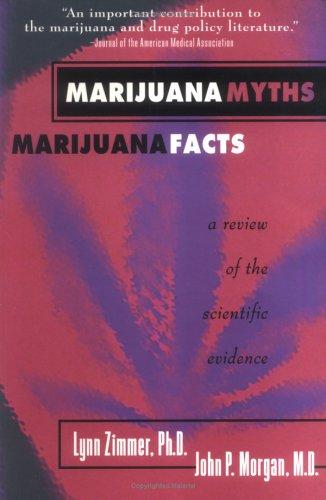
Marijuana's Illegality makes it more Popular. If one wants to understand how criminalization of drugs is working toward the opposite goal of reduced drug use, one only has to look at the case of marijuana. The use of marijuana by teenagers is higher in the United States than in most countries that have decriminalized its use.
The Dutch, who have decriminalized and started to legalize marijuana, have lower use rates than the United States, where the drug is illegal. 47.3 percent of young adults in America compared to 45.5 percent in the Netherlands. 3 Older teens, 38.2 percent in the U.S., compared to 29.5 percent and 13.5 percent in contrast to 7.2 percent of younger teens in the Netherlands.
Source: Zimmer, Lynn Ph.D., and John P. Morgan M.D. “Marijuana Myths, Marijuana Facts” The Lindesmith Center, 1997. p. 51
March 2026 Update: The Prohibition Paradox
Let’s talk about the elephant in the room that the "War on Drugs" crowd refuses to acknowledge: prohibition is a failed social experiment. If you’ve been following JuanaWorld, you know we don't buy the government-sanctioned fairy tale that making a plant illegal somehow makes the public "safer." If anything, the data shows that the current U.S. approach—criminalizing possession and treating users like public enemies—is actually driving the exact behavior they claim to be preventing.
Look at the cold, hard numbers. In the United States, where we double down on draconian enforcement, teen usage rates remain stubbornly high. Now compare that to the Netherlands, where they’ve had the common sense to decriminalize and regulate for decades.
As cited by researchers Zimmer and Morgan, the contrast is stark. We see nearly 40% of older teens in the U.S. using cannabis, compared to significantly lower rates among their Dutch counterparts. When you look at younger teens, the U.S. usage rate is nearly double that of the Netherlands.
Why the "Fear" Strategy Backfires
Why does this happen? It’s simple sociology: The Forbidden Fruit Effect. When you categorize a substance as "illegal," you strip away the ability to regulate quality, age, or safe usage. You turn a neutral chemical interaction into an act of rebellion.
By treating cannabis like a hardened crime, the system creates a black market where there are no "ID checks" at the door. Dealers don't ask for birth certificates, and they certainly don't care about the integrity of what they’re selling.
The Reality Check
The government’s refusal to recognize that decriminalization leads to more responsible, mature usage isn't just ignorance—it’s an intentional feature of the system. A "clean" market with regulated, legal access threatens the billions of dollars that flow into the police, the court system, and the prison-industrial complex every year.
They don't want you to know that the Dutch model—which treats usage as a health and cultural reality rather than a criminal one—is actually more effective at protecting youth. They want you terrified. They want you believing that if you stop locking people in cages, society will collapse.
The data from 1997 to 2026 confirms the same thing: Prohibition doesn't reduce use; it just shifts who profits from it and who suffers because of it. It's time we stop pretending that the "War on Drugs" is about public health. It’s about social control. If we truly wanted to reduce harm and lower usage rates among teens, we’d stop the prohibition theater and start the real work of education, regulation, and critical inquiry.
What are your thoughts on this? Does the Dutch model actually prove that legalization is the key to safety? Drop a comment below.
Comments
Post a Comment